ENS5543 Effective Career Planning Module WorkbooK | ECU
| Category | Assignment | Subject | Engineering |
|---|---|---|---|
| University | Edith Cowan University (ECU) | Module Title | ENS5543: Effective Career Planning |
PRE-MODULE TASK: MIND-MAP
You may already have a good idea of where you want your career to take you, or you might only have a limited idea of your chosen career path. Either way, a great place to start when you are planning your career is to research prospective career paths.
To do this, your first task is to create a mind map. Consider the mind map as a planning and notetaking tool. The purpose of creating a mind map is to help you organise and consolidate your thoughts and ideas based on what you find when undertaking this module and any associated research. You will be adding to this mind-map as you progress through the module.
Mind-map Task 1
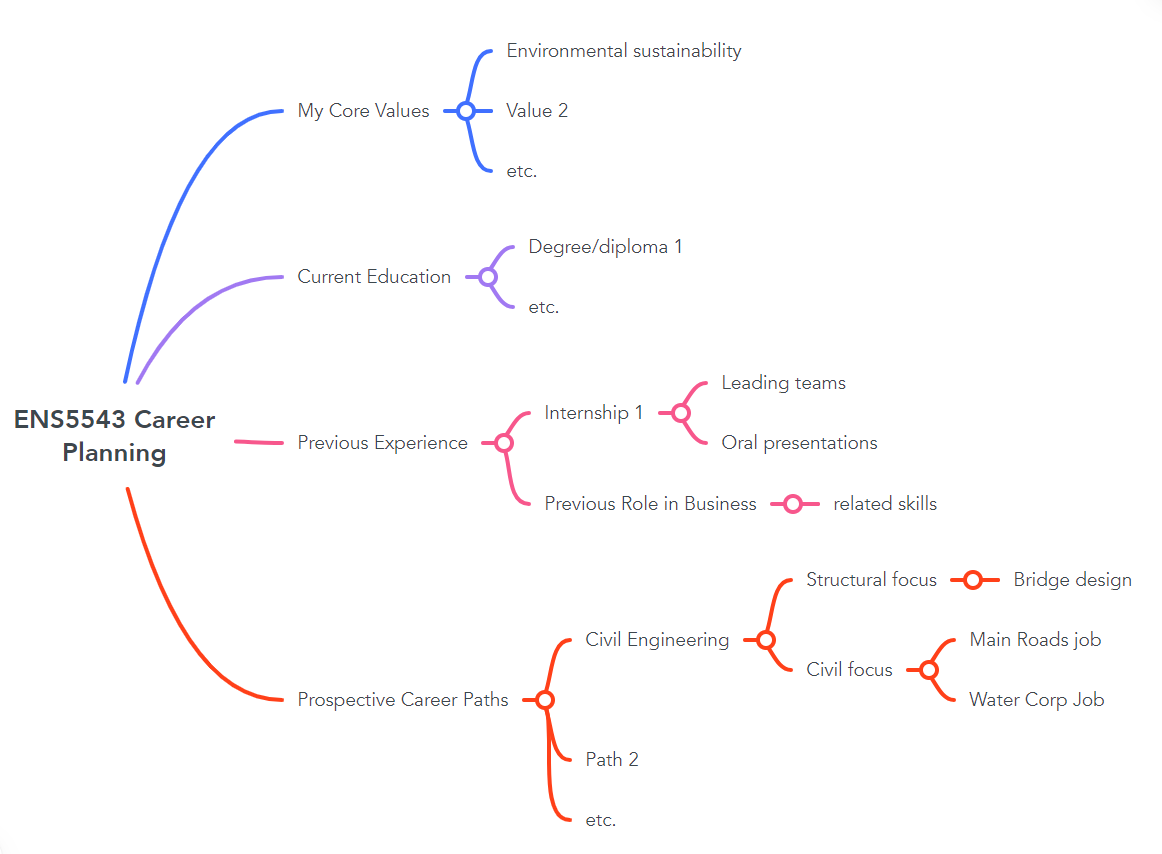
Figure 1 shows an example mind-map created using Mindmeister which you have access to through your ECU student account.
Your first task is to create a mindmap in Mindmeister (or another tool) detailing:
- your core values
- current education (or degree you are about to receive)
- any previous career experience, and
- prospective career paths.
You are expected to spend some time researching different prospective career paths as part of your task. These can be within Engineering (i.e. different things you can do with your degree) or an alternative path. You might be surprised to learn about industries (like finance) where engineering degrees are highly sought after! Include at least 3 different paths in your mind-map. Each may have different branches (as shown under “Civil Engineering” in the example in Figure 1). Note the figure shows an example ONLY and your map is expected to be unique to you and contain more detail.
Mind-map Task 2
A useful way of getting started in career contingency planning and pre-empting disruption is to carry out a personal SWOT analysis. This involves you analysing your personal strengths, weaknesses, opportunities, and threats, which can help you identify and prepare for things that might impact on your career.
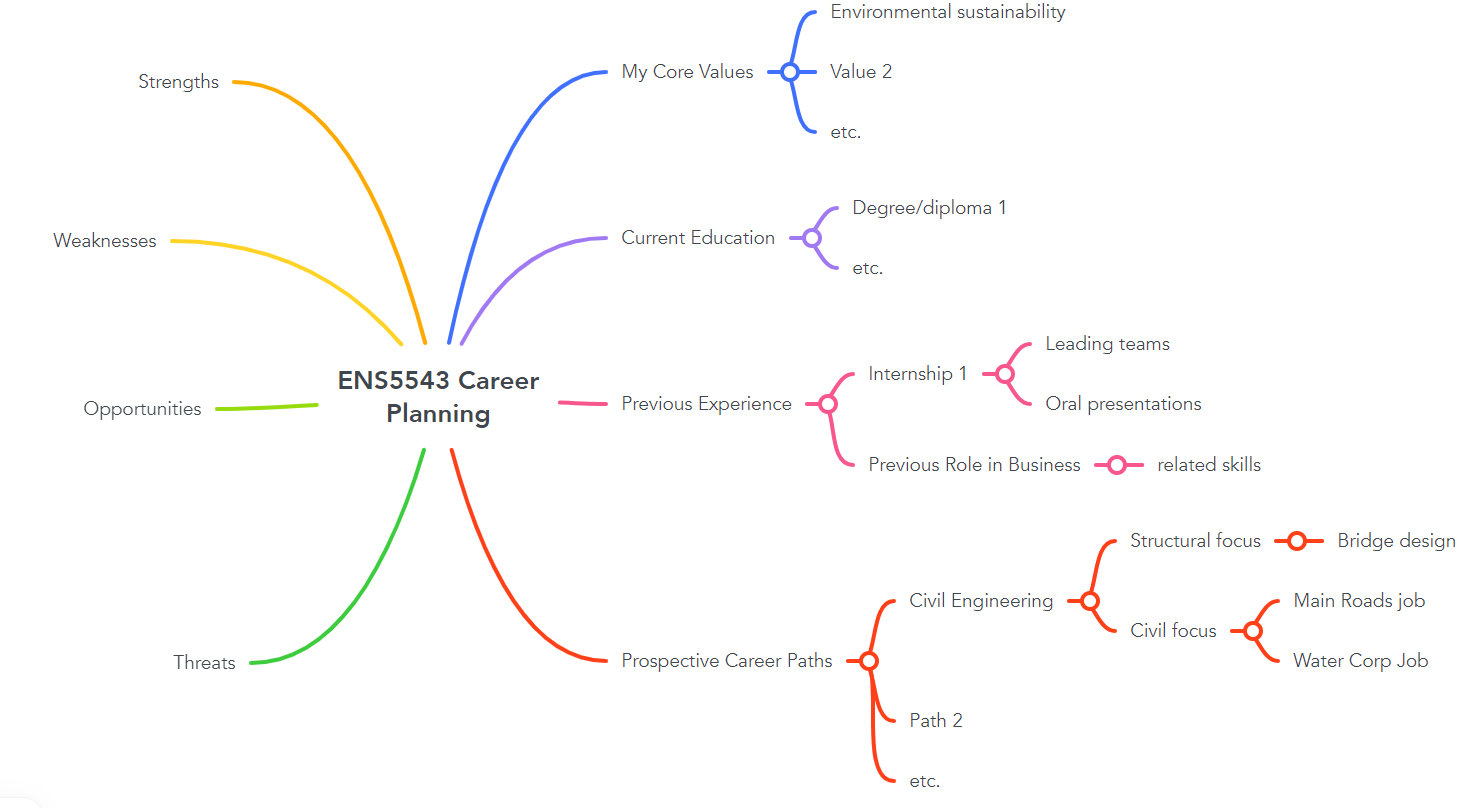
Task 3 is to complete a personal SWOT analysis and add this to the other side of your mind-map, as shown in Figure 2. Note the figure shows an example ONLY and your map is expected to be unique to you and contain more detail. It may be helpful to frame this analysis using the Engineers Australia Stage 1 Competencies.
- Identify your strengths. What are you good at? What skills do other people recognise in you? What are you most proud of about yourself? As an example, include the transferrable skills you identified in Section 1.
- What are your weaknesses? Where do you lack experience and skills? What do you feel is holding you back? You might consider including any work done in Section 2 on growth mindset.
- Are there opportunities you can consider? What would you love to do that you’re good at? How can you minimize your weaknesses? Can you link any of these opportunities to your identified potential career paths?
- What threats may there be to your continued success? Are there weaknesses that need to be addressed? What obstacles may you face?
SMART Goals
To make your SWOT analysis useful, you need to use it to inform action. The following are examples of goals that you could develop following your SWOT analysis:
- In the Strengths section of your analysis, a goal could be to be more conscious of your strengths, and deploy them with confidence in relevant situations.
- For your Weaknesses, a goal could be to gain experience in an error you lack experience, or to engage in skills development to help grow your skills.
- For the Opportunities, you could create a goal to pursue opportunities that you’ve identified.
- For Threats, you could create a goal to prepare for the threat, or break down obstacles you’ve identified

